UPMC Hillman, Pitt Scientist Awarded Grant for Invasive Lobular Carcinoma Study
By: Allison Hydzik
Dr. Steffi Oesterreich marked 10 years of the ILC Symposium she founded with a keynote lecture and new funding to study an aggressive breast cancer subtype.
•Invasive lobular carcinoma accounts for 10% to 15% of all breast cancer diagnoses, or about 48,000 U.S. cases a year, but receives less than 1% of dedicated breast cancer research funding.
• Dr. Adrian Lee, co-director of the Lee-Oesterreich Lab and a professor of pharmacology and chemical biology at Pitt, presented new invasive lobular carcinoma research models at the symposium.
• The Leigh Pate Memorial keynote lecture, honored Leigh Pate, a patient advocate who co-founded the Lobular Breast Cancer Alliance with Oesterreich and died in 2022 from cancer complications.
Dr. Oesterreich launched the ILC Symposium in 2016 to bring researchers, patients and advocates together in Pittsburgh around an understudied form of breast cancer. The first symposium drew an international audience along with dozens of patients — a mix that was unusual at a scientific conference at the time.
Leigh Pate (left) and Dr. Steffi Oesterreich became close friends after the first ILC Symposium 10 years ago. Pate has since passed from cancer and Dr. Oesterreich gave the keynote lecture this year in her honor. Credit: Steffi Oesterreich
At the San Francisco symposium, Oesterreich delivered the Leigh Pate Memorial keynote lecture in honor of Leigh Pate, a patient advocate who died in 2022 from cancer complications. Pate and Oesterreich became friends after the first symposium and went on to co-found the Lobular Breast Cancer Alliance. The Leigh Pate Memorial lectureship was founded and awarded to Dr. Oesterreich by Flora Migyanka and The Dynami Foundation.
“After the symposium, Leigh and I became really good friends,” said Dr. Oesterreich. “She was a force for advocacy, getting the patients together and starting the Lobular Breast Cancer Alliance with me and others. It has grown significantly and is now also able to give grants. I’m so proud of her and all that we’ve accomplished.”
What is invasive lobular carcinoma and why is it hard to detect?
Invasive lobular carcinoma, or ILC, is the most common special histological type of breast cancer, representing 10% to 15% of all breast cancer diagnoses and accounting for 48,000 people diagnosed in the United States each year. Despite its prevalence, ILC receives less than 1% of dedicated breast cancer research funding.
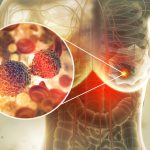
Unlike more common breast cancers, ILC cells typically spread in single-file strands through surrounding tissue rather than forming a distinct lump. That makes the disease notoriously hard to detect on standard screening mammography and difficult to track when it spreads, so tumors are often found at later stages.
Grant will fund research into aggressive pleomorphic invasive lobular carcinoma subtype
“This generous funding from the Lobular Breast Cancer Alliance – made possible by a gift from lobular breast cancer survivor Dr. Shannon Klingman – is critical to enabling high-risk, high-reward research. We hope our studies will lead to impactful discoveries in pleomorphic ILC that can be translated from the laboratory into clinical trials and ultimately bring life-saving therapies to thousands of patients,” Dr. Oesterreich said. “It provides me and my fellow scientists with the unique opportunity to think outside the box and find innovative approaches to identify targets on the pleomorphic lobular cancer cells that we can exploit to destroy the cancer with novel therapies.”
Lee-Oesterreich Lab trainees present new invasive lobular carcinoma research models
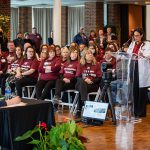
Multiple trainees in the Lee-Oesterreich Lab earned travel grants to attend and learn at the ILC Symposium. Lab co-director Dr. Adrian Lee, professor of pharmacology and chemical biology at Pitt, presented on new ILC models the team has generated that will allow researchers worldwide to study the disease. Other UPMC Hillman scientists and clinicians presented research, as did several of Oesterreich’s former trainees, who have gone on to launch their own research programs at other academic medical centers.
Precision medicine for invasive lobular carcinoma remains the goal, Oesterreich says
“ILC used to be a bit of an afterthought, but now it has a visible presence at all breast cancer symposium meetings and ILC Programs of Excellence for research and treatment – including at UPMC Hillman – have been established,” she said.
“But we’re still far from reaching the final goal, which is true precision medicine for patients with ILC. We need tailored detection techniques and dedicated drugs, neither of which exist yet,” Dr. Oesterreich said. “They’re coming, though – there are now multiple clinical trials running specifically for patients with ILC and far, far more companies are interested in getting drugs tested. The future looks bright.”
Frequently Asked Questions
Q: What is invasive lobular carcinoma?
A: Invasive lobular carcinoma, or ILC, is a form of breast cancer that accounts for 10% to 15% of all breast cancer diagnoses, or about 48,000 cases in the United States each year.
Q: How much funding did Dr. Oesterreich receive to study invasive lobular carcinoma?
A: Oesterreich received $500,000 — half of a $1 million award from the Lobular Breast Cancer Alliance Inc. — to study gene expression pathways driving pleomorphic invasive lobular carcinoma, an aggressive subtype with high recurrence rates.
Q: Why is invasive lobular carcinoma harder to detect than other breast cancers?
A: ILC cells typically grow in single-file strands through breast tissue instead of forming a distinct lump, which makes the disease difficult to see on standard mammograms and often leads to later-stage diagnoses.