For Rick Wawrose, M.D. and Alexandra Gabrielli, M.D., orthopaedics is more than a shared specialty — it is part of their shared story. The husband-and-wife surgeons first met during orthopaedic surgery residency at UPMC in 2017, where they trained side by side in one of medicine’s most demanding fields.
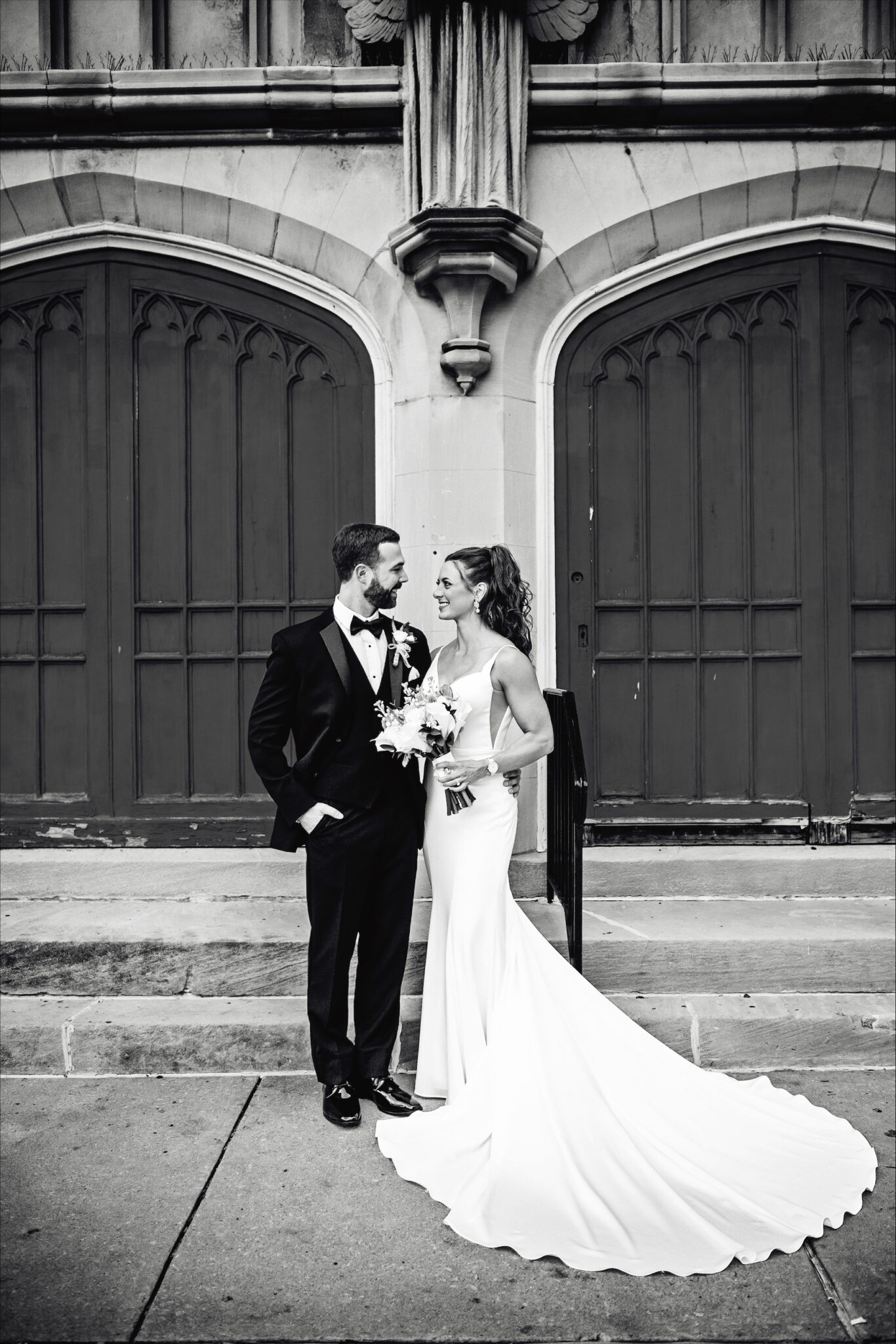
Dr. Wawrose and Dr. Gabrielli
Today, the Franklin Park couple practices at UPMC Passavant, bringing two distinct areas of orthopaedic expertise to the same hospital community. Dr. Gabrielli specializes in joint replacement, while Dr. Wawrose focuses on spine surgery — a pairing that can be especially valuable for patients whose hip, knee, back, or leg symptoms overlap.
“UPMC Passavant was a natural fit because it serves our northern Pittsburgh community while still offering the resources and specialty care of a major academic health system,” they said. “For spine and joint replacement patients especially, having access to advanced imaging, anesthesia, physical therapy, perioperative support, specialty consultants, and other hospital services close to home makes a real difference in both outcomes and patient experience.”
A Shared Start, Separate Specialties
They worked closely alongside each other throughout residency, often taking care of the same patients and operating together as residents. “We also spent time together in the Biodynamics Lab at the University of Pittsburgh, where we studied orthopaedic biomechanics and surgical techniques,” said Dr. Wawrose. “After residency, we both pursued subspecialty fellowship training before ultimately returning to UPMC to build our practice.”
Dr. Wawrose attended medical school at McGovern Medical School at UTHealth Houston and completed a spine surgery fellowship at Emory University. Dr. Gabrielli attended Oakland University William Beaumont School of Medicine and completed her adult reconstruction fellowship at the Rothman Orthopaedic Institute.
Their decision to come back was both professional and personal: both have some family in the area, and both wanted to care for patients in the region they call home.
Dr. Gabrielli’s path also places her among a relatively small group nationally. Women remain underrepresented in orthopaedic surgery; a 2025 study presented at the American Academy of Orthopaedic Surgeons Annual Meeting found that women made up about 6% of orthopaedic surgeons in 2018, increasing to about 7.5% in 2023. Against that backdrop, her presence in the field is notable — and part of a slowly growing shift in the specialty.
When Symptoms Do Not Fit Neatly Into One Category
It is not every day that Drs. Wawrose and Gabrielli care for the same patient. But it happens often enough that their collaboration has become an important part of how they approach complex cases.
Some patients arrive with overlapping symptoms — hip pain that may be related to the spine, knee discomfort complicated by nerve issues, or leg pain that does not immediately point to one clear cause. Hip-spine syndrome is one common example, but the surgeons also cross paths when caring for trauma patients, people with complex osteoporosis, and patients whose symptoms require more than one specialty perspective.
In those situations, being in the same health system — and the same hospital community — allows them to communicate directly, talk through difficult cases, and help patients move toward the right diagnosis and treatment plan.
“One of the unique aspects of practicing in the same health system is that we understand each other’s specialties and can easily talk through difficult cases,” they said. “Many patients come in with symptoms that do not fit neatly into one category and having that direct line of communication helps us think through the problem from both perspectives.”
Making the Hospital Feel Like Home
Their shared work at UPMC Passavant also adds a personal dimension to their professional lives. Their days are busy, and their practices are different, but even shared small moments help make the hospital feel more like home.
“On a personal level, it is also really nice to be part of the same hospital community,” they said. “Our days are busy and our practices are different, but getting to see each other around the hospital, even if it is just grabbing a quick bite to eat between surgery and clinic patients, makes Passavant feel even more like home. We are grateful to care for patients in the same community where we live and work.”
A Patient Story That Shows the Value of Collaboration
For one North Hills patient, Cindy Vasil, the connection between the two specialties changed the course of her care. She initially saw Dr. Gabrielli for what she thought was knee symptoms, but Dr. Gabrielli’s evaluation led her to further testing and, soon after, a diagnosis by Dr. Wawrose of spinal cord compression that had gone unrecognized for years.
After spine surgery, she experienced a remarkable recovery and was able to return to meaningful activities — including dancing with her son at his wedding.
“I’m very thankful for the care I received and am extremely happy; I’ve healed well,” Vasil said. “I was fortunate that Dr. Gabrielli took the time to look at everything as I wouldn’t have known where to turn.”
Her story reflects what Drs. Wawrose and Gabrielli see often in orthopaedic care: patients are not always defined by one symptom, one joint, or one diagnosis. Sometimes, the best answer comes from looking at the whole picture — and from specialists who can work together to find it.
Related Posts: