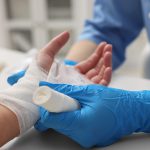
When skin grows over a wound, it looks like it’s healed, but that is not always the case.
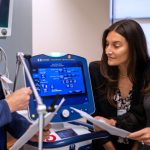
“Many years ago, our team observed that while new skin closes the wound, it does not always restore barrier function,” Dr. Chandan K. Sen, FNAI, said. “Barrier function keeps moisture in and pathogens out. We recently discovered that if wounds close without restoring the barrier, they won’t stay closed. We can monitor this with a pen-like device that measures transepidermal water loss (TEWL) right at the bedside.”
This is one of the breakthroughs in wound care that has come from the research and trials of a team of about 50 people looking to revolutionize wound healing services across UPMC.
Dr. Sen, who is the Bartley P. Griffith, MD, FACS, FRCS, chair in Regenerative Medicine and McGowan Institute for Regenerative Medicine, associate vice chancellor, Life Sciences Innovation and Commercialization, and chief scientific officer, Wound Care, UPMC, and Dr. Gayle M. Gordillo, FACS, senior medical director, UPMC Wound Healing Services, senior medical director, Pressure Injury Prevention and Outcomes, and professor, Plastic Surgery, University of Pittsburgh School of Medicine, head this leading-edge team.
When the team arrived, they focused on harnessing UPMC’s research potential. While coordinating research across multiple sites, they recognized that wound care is not a one-size-fits-all solution, but must reflect the complexity and diversity of each patient’s needs. This approach enables collaboration and innovation on a scale rarely seen elsewhere.