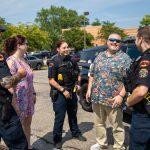
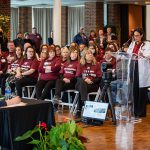
After 29 years with the Pennsylvania State Police, David Heckman could have stepped away from public service. Instead, he took on a new mission: helping protect the people who care for patients every day.
Key Takeaways
-
• David Heckman, chief of UPMC Police and senior director of Public Safety Operations, leads one of Pennsylvania’s largest health care public safety organizations, overseeing more than 950 public safety professionals dedicated to protecting patients, visitors, employees and facilities across UPMC.
-
• A former Pennsylvania State Police captain with 29 years of law enforcement experience, Heckman is focused on creating safer health care environments through prevention, de-escalation, training and a culture of shared responsibility that helps caregivers focus on delivering exceptional patient care.
-
-
-
• Under Heckman’s leadership, UPMC has expanded workplace safety and hospital security initiatives through advanced technologies, including weapons detection systems, increased police and security staffing, emergency preparedness programs and workplace violence prevention efforts.
-
-
When David Heckman retired as a captain with the Pennsylvania State Police in 2017, he wasn’t looking to leave public service behind. He was looking for a new way to make a difference.
That search led him to UPMC, where he now serves as chief of UPMC Police and senior director of Public Safety Operations, with oversight of the largest private police force in Pennsylvania.
For Heckman, the work is personal.
“My wife and daughter are nurses, so I have a personal interest in keeping our clinical staff safe,” he said. “When I think about health care workers walking into our hospitals every day to care for others, I want them to know we’re doing everything possible to create a safe environment for them.”
Building a New Model for Health Care Public Safety
Creating a safe environment for patients, visitors and employees has always been part of UPMC’s commitment to delivering exceptional care. But health care safety has changed dramatically over the past decade.
Today, UPMC Public Safety includes more than 950 professionals, including sworn police officers and security personnel who support hospitals, outpatient facilities and clinical locations across the health system, and expands broadly outside of public safety staffing.
UPMC invests in people, training, technology and security enhancements designed to help prevent incidents and strengthen safety throughout its facilities. Those efforts include advanced weapons detection technologies, secure care areas, emergency preparedness initiatives and ongoing workplace violence prevention programs.
For Heckman, however, safety is about much more than technology and training; it’s about people.
“What interests me most is finding innovative ways to better protect our people,” he said. “Technology can be an important tool, but no system can replace the professionalism, compassion and judgment of the men and women serving on our Public Safety teams, clinical teams at the bedside and everyone within our walls serving the community every day.”
A Different Approach to Public Safety
Unlike traditional law enforcement environments, hospitals and health care facilities bring unique challenges.
Patients may be experiencing fear, pain, confusion, behavioral health crises or other highly stressful situations. Family members are often navigating some of the most difficult moments of their lives. Health care professionals work in fast-paced environments where circumstances can change quickly.
Those realities require a specialized approach.
“Health care public safety requires a different skill set,” Heckman said. “Our teams need to be prepared to respond to difficult situations, but they also need empathy, patience and the ability to support people who may be experiencing one of the hardest moments of their lives.”
That philosophy has helped shape the evolution of UPMC Public Safety. While security programs once focused primarily on responding to incidents, today’s public safety teams place increasing emphasis on prevention and identifying potential concerns before they become larger problems.
The goal is simple: create an environment where patients, staff and visitors can focus on what matters most.
“Everything we do is about helping create a safe environment where care can happen,” Heckman said.
Safety Is a Shared Responsibility
As health care organizations across the country continue to address growing safety and security challenges, Heckman believes preparedness is one of the most important tools available.
In recent years, UPMC has expanded training opportunities focused on workplace violence prevention, de-escalation techniques, active threat preparedness and emergency response. These efforts support employees while also helping foster a culture where safety is everyone’s responsibility.
“I wish everyone would take full advantage of the training and information that’s available,” Heckman said. “Being prepared and maintaining situational awareness will help keep you safe not only at work, but in everyday life.”
He also encourages people to trust their instincts when something doesn’t seem right.
“You don’t have to determine whether something is truly a threat,” he said. “That’s our job. We’d much rather investigate a concern early than miss an opportunity to prevent harm.”
The Work People Don’t Always See
While public safety professionals are often most visible during emergencies, much of their work happens behind the scenes.
Threat assessments, training exercises, emergency planning, security reviews, technology enhancements and proactive safety measures, like simply rounding intentionally in the halls, all play a role in helping prevent incidents before they occur.
For Heckman, some of the most meaningful moments aren’t found in reports or statistics. They’re the moments when someone shares that they feel safer because they knew help was available if they needed it.
“There really is no greater compliment than hearing someone share with us how they feel safer knowing we’re there for them,” he said. “Our employees dedicate themselves to caring for others. If our work allows them to focus on that mission without worrying about their safety, then we’ve done our job.”
Nearly four decades into a career devoted to public safety, Heckman’s purpose remains clear. Helping protect the people who care for others isn’t just his job. It’s a mission that continues to guide his work every day.
Related Posts
Related Posts: